

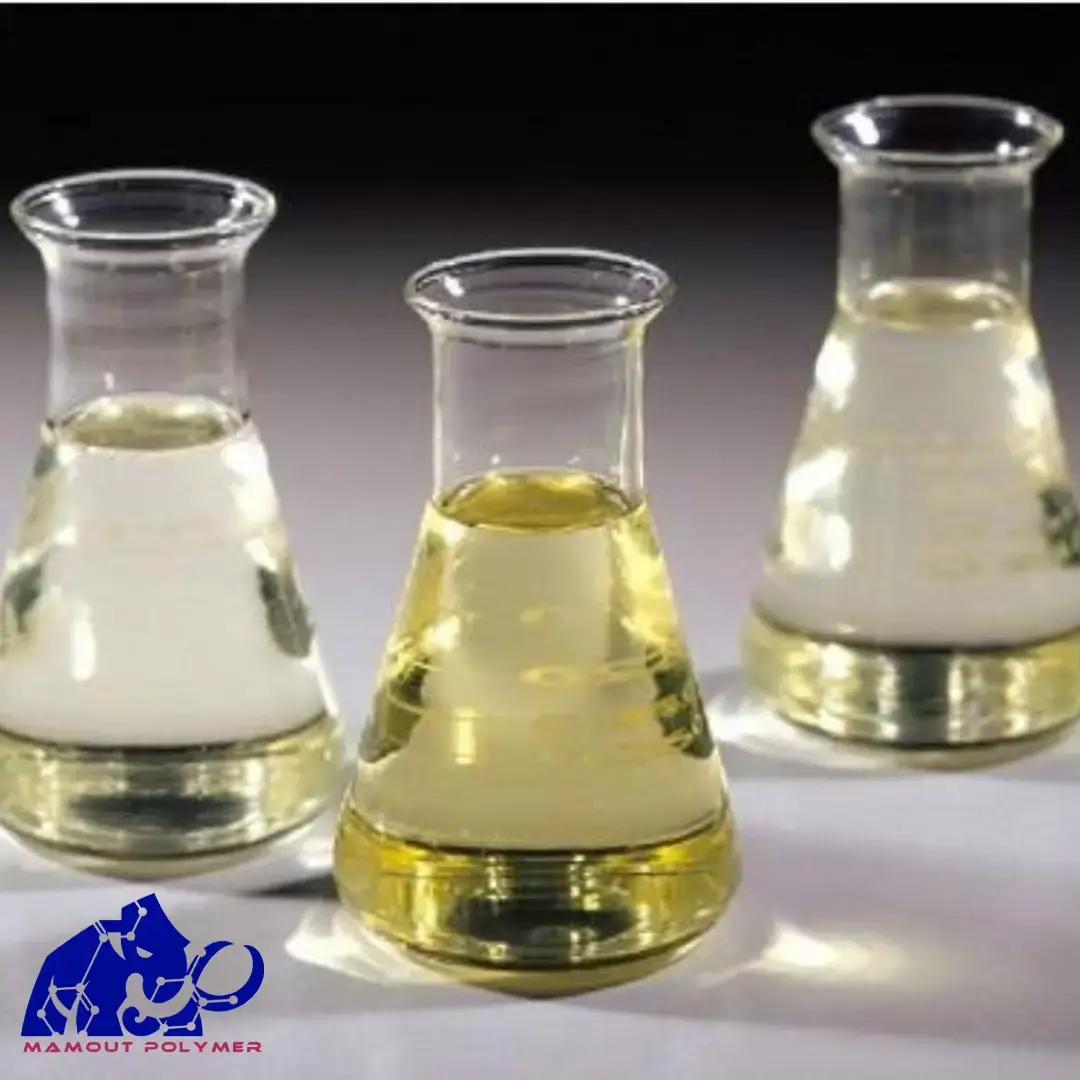

Epoxy soybean oil
توضیحات
Epoxy Soybean Oil: Introduction, Properties and Applications
Epoxy soybean oil is one of the important derivatives of vegetable oils, known for its special properties and wide applications in various industries including paints, plastics, lubricants and surface coatings. This oil is obtained from soybean oil by the chemical reaction of epoxidation, which significantly improves its physical and chemical properties.
1. Definition and production process of epoxy soybean oil
Soybean oil naturally contains unsaturated fatty acids. These fatty acids contain double bonds (carbon-carbon) that are converted into oxirane (epoxide) rings in an epoxidation reaction. This process is usually carried out using peroxides or other oxidants in the presence of a catalyst.
Epoxidation of soybean oil creates a structure that is more chemically active and reactive and can be used in various formulations as a raw material or additive. The end result is an oil with different physical and chemical properties than raw soybean oil.
2. Characteristics of epoxy soybean oil
-
-
High chemical stability: The presence of epoxide groups in the structure increases the oil’s resistance to oxidation.
-
Suitable viscosity: This oil has a medium to high viscosity, which allows it to be adjusted in different formulations.
-
High reactivity: Epoxide groups can easily react with other chemical compounds, this property is very important in the production of resins and coatings.
-
Environmentally friendly: Soybean epoxy oil is derived from natural and renewable resources and is considered a green alternative to petroleum products.
-
Environmentally friendly: Soybean epoxy oil is derived from natural and renewable resources and is considered a green alternative to petroleum products.
-
3. Applications of epoxy soybean oil
A) Paint and resin industry
Epoxy soybean oil is used as an important raw material or additive in the production of alkyd paints and epoxy resins. The presence of epoxide groups in this oil improves the adhesion, flexibility and chemical resistance of paints and resins. Also, the use of this oil reduces the use of petroleum products and increases the environmental sustainability of paint products.
B) Production of plastics and masterbatches
This oil is used in the production of biodegradable plastics and specialty masterbatches. Epoxy soybean oil is used as a plasticizer and stabilizer in plastic formulations, improving the mechanical and process properties of the products.
C) Industrial lubricants and oils
Due to its specific chemical structure, soybean epoxy oil is used in the formulation of bio-lubricating oils and cutting oils. This oil can be a suitable alternative to mineral oils with reduced environmental pollution.
D) Surface coatings and adhesives
Due to the high reactivity of the epoxide groups, this oil plays an important role in the production of protective surface coatings and specialty adhesives. The use of soybean epoxy oil improves adhesion, mechanical strength, and heat stability.
4. Advantages and benefits of epoxy soybean oil over conventional oils
-
-
Environmentally friendly: Unlike petroleum oils, this product is obtained from natural and renewable resources and is biodegradable in the natural environmental cycle.
-
Reducing pollution: Using soybean epoxy oil helps reduce greenhouse gas emissions and is in line with sustainable development policies.
-
Reducing pollution: Using soybean epoxy oil helps reduce greenhouse gas emissions and is in line with sustainable development policies.
-
Reducing dependence on oil: As a bio-based alternative, it helps reduce the consumption of fossil resources.
-
Variety of applications: Ability to be used in various industries with different physical and chemical properties.
-
5. Challenges and limitations
-
-
Price: Due to the more complex production process and costs associated with natural raw materials, the price of soybean epoxy oil is typically higher than petroleum oils.
-
Limited thermal stability: Although stability has improved, it may still be weaker than some synthetic oils at very high temperatures.
-
Need for precise process control: The production and application of this oil requires precise conditions and controls to achieve the desired properties.
-
6. Market trends and future of epoxy soybean oil
With the increasing global attention towards green and environmentally friendly products, the demand for vegetable epoxy oils, especially soybean epoxy oil, is growing. The paint, plastics, industrial coatings and lubricants industries are increasingly looking for bio-based and renewable alternatives that have desirable technical properties.
Research and development continues to improve performance, reduce production costs, and expand the applications of this oil, and it is expected that its position in the global market will be further consolidated as technology advances.
Conclusion
As a bio-based and efficient product, epoxy soybean oil plays an important role in the chemical and polymer industry. With unique features such as chemical stability, high reactivity, environmental friendliness and wide applications, this oil is considered a suitable alternative to traditional petroleum oils. Although there are challenges in terms of cost and thermal stability, a bright future is predicted for this product, given the growing trend of green industries.
نظرات (0)
Shipping & Delivery


نقد و بررسیها
هنوز بررسیای ثبت نشده است.